
Contents:
- Why This Combination Matters for Anyone Seeking Genuine Advancement
- Basics Revisited: What Makes Microbonds Different at an Advanced Level
- Intermediate Territory: Combining Microbonds With Colour Techniques Like Ombre
- Advanced Colour Planning Beyond Ombre
- Comparing Microbonds With Keratin Fusion for Shorter Hair
- Advanced Nuances: Zone-Specific Bond Planning
- A Regional Perspective on Advanced Technique Availability
- Expert Insight on Advanced Short-Hair Technique
- How an Advanced Consultation Differs From a Standard One
- Cost Considerations for Advanced Techniques
- Understanding the Removal Side of Advanced Techniques
- Common Mistakes to Avoid at This Level
- What to Look for When Choosing an Advanced Provider
- Frequently Asked Questions
- Can ombre colour work well with short hair extensions?
- Is keratin fusion or microbonds better for shorter hair?
- Does regional location affect the quality of advanced techniques available?
- Should I return to the same salon for removal as for fitting?
- How much more does an advanced, zone-specific fitting typically cost?
- What ring material should an advanced provider be using?
- Can I request root-smudging or balayage instead of a traditional ombre gradient?
Hair augmentation is far from a modern invention — Ancient Egyptians wove plant fibres and human hair into wigs and extensions more than three thousand years ago, and Victorian-era Londoners built entire cottage industries around hairpieces long before anyone had heard of a keratin bond. What’s genuinely new is the precision now available for a category that was, until relatively recently, treated as an afterthought: shorter hair extensions using microbond techniques, refined to a level of sophistication that would have been unrecognisable even a decade ago.
For readers who already understand the basics of hair extensions and want to go further, shorter hair extensions paired with microbonds represent one of the more technically interesting corners of the category right now — precise, adaptable, and increasingly paired with advanced colour techniques like ombre blending that simply weren’t practical with older, bulkier bonding methods.
That historical thread is worth dwelling on for a moment, because it explains something about why the current level of sophistication matters. Early hairpieces and wigs were built to disguise entirely, with no expectation of blending seamlessly into a wearer’s own growing hair. Modern bonded methods flipped that goal entirely — the aim now is invisibility, a result indistinguishable from natural growth, and that shift in ambition is precisely what has driven the technical refinement behind today’s best microbond and shorter-length techniques.
Why This Combination Matters for Anyone Seeking Genuine Advancement
Shorter hair has less length to disguise imprecise work, which means microbonds — small, closely spaced attachment points — have become the default advanced technique specifically because they tolerate almost no room for error and reward genuine technical skill. For experienced clients who have already been through a standard fitting elsewhere, understanding what separates a genuinely advanced approach from a merely competent one is what determines whether a second or third round of extensions actually improves on the last.
Basics Revisited: What Makes Microbonds Different at an Advanced Level
At a basic level, a microbond is simply a small ring clamped around natural hair and an extension strand. At an advanced level, ring size, spacing and placement are calibrated individually to density variations across different zones of the head — finer spacing and smaller rings around the temples and nape, slightly larger spacing where hair is naturally more robust. This zone-specific calibration is what separates a technician working from genuine expertise from one applying a single, uniform template regardless of the client’s actual head.
Ring material has also advanced considerably. Early microbond rings were often plain aluminium, prone to oxidising slightly with repeated washing and occasionally causing mild irritation for clients with sensitive scalps. Copper-lined and silicone-coated rings, now standard at more advanced providers, resist this oxidation and reduce friction against the hair shaft, extending how comfortably a set can be worn across a full four-to-six-month cycle.
Intermediate Territory: Combining Microbonds With Colour Techniques Like Ombre
Shorter hair has historically been considered more difficult to colour-blend convincingly with extensions, simply because there’s less length for a gradual colour transition to play out across. This has changed considerably with more precise microbond placement, which allows technicians to plan bond position around where a colour transition will actually sit once the extensions are in.
Ombre hair extensions on shorter lengths require particularly careful planning, since the transition from a darker root to a lighter end needs to complete within a shorter overall span than it would on longer hair. A rushed approach compresses the transition awkwardly, creating a visible banding effect rather than a smooth gradient. Technicians experienced with this specific combination plan bond placement first, then select extension pieces graded to transition gradually within that shorter span, rather than treating colour and bond placement as two unrelated decisions.
Advanced Colour Planning Beyond Ombre
Ombre is the most requested advanced colour technique on shorter extensions, but it isn’t the only one worth understanding. Balayage-style blending, which softens the transition between shades with hand-painted, irregular sections rather than a clean horizontal line, can work even more convincingly on shorter hair than a traditional ombre gradient, since it doesn’t rely on a specific length to complete a smooth transition. Root-smudge techniques, blending a shade close to the natural root colour into the extension pieces near the scalp, are another advanced option particularly suited to shorter sets, since they reduce the visual impact of new growth between move-up appointments — a genuinely useful trick for clients who don’t want root regrowth to be quite so noticeable between salon visits.
Each of these techniques requires the colourist and the extension technician to coordinate closely, ideally as the same person or a closely collaborating team, since colour formulation and bond placement decisions influence each other directly on shorter lengths in a way they simply don’t on longer hair with more room for error.
Comparing Microbonds With Keratin Fusion for Shorter Hair
Experienced clients weighing up their options often ask specifically how microbonds compare with keratin fusion for shorter lengths, since both are viable and the choice isn’t always obvious. Keratin fusion offers a longer stretch between move-up appointments — often ten to twelve weeks even accounting for shorter hair’s faster-noticeable regrowth — but the heat exposure involved carries slightly more cumulative risk to finer hair around the temples and nape, areas already more delicate on many shorter cuts.
Microbonds trade a somewhat shorter interval between appointments, typically six to eight weeks on short hair, for meaningfully lower cumulative stress on the hair shaft, since there’s no heat and the mechanical clamp can be released and reapplied without any chemical or thermal residue building up over multiple cycles. For clients planning to wear extensions continuously across several years, rather than a single set, this lower cumulative stress often matters more than the slightly more frequent appointments microbonds require.
Advanced Nuances: Zone-Specific Bond Planning
The most technically advanced short-hair fittings treat the head as several distinct zones rather than a single uniform surface. The crown, generally the most robust area, can support marginally larger bonds spaced further apart. The temples and hairline, typically finer and under more visible tension when hair is pulled back, need smaller bonds spaced more closely to distribute weight evenly. The nape, often overlooked, benefits from a similar approach to the temples, since hair here is frequently finer than the surrounding areas even on an otherwise thick head.
A hair extension salon by Ivana Farisei standards applies this zone-specific planning as a matter of course for every short-hair client, mapping bond placement against an individual density assessment rather than defaulting to a single bond size across the whole head — a level of granularity that genuinely experienced clients notice and appreciate compared with less rigorous providers.
A Regional Perspective on Advanced Technique Availability
Access to this level of technical sophistication varies noticeably across the UK. London supports the deepest bench of technicians trained specifically in zone-specific bond planning and advanced colour blending for shorter lengths, reflecting both higher demand and a larger pool of specialist training opportunities concentrated in the capital. Across the Midlands and the North, advanced techniques like ombre-integrated microbond planning are increasingly available but still less common, often requiring a slightly longer search to find a technician with genuine, demonstrated experience in the combination specifically. In more rural parts of the Southwest and Wales, this level of specialism remains comparatively rare, with most local providers focused on standard applications rather than the more technically demanding combinations discussed here.
Expert Insight on Advanced Short-Hair Technique
“What separates an advanced fitting from a standard one isn’t the tools — it’s the planning that happens before any tool touches the client’s hair,” says Alexandra Voss, a colour and extension specialist who trains technicians across several London studios. “Zone-specific bond mapping, colour transitions planned around bond placement rather than applied afterwards — that level of forethought takes real experience to execute well, and it’s genuinely rare to find consistently, even among salons charging premium prices.”
This observation reflects precisely the standard that experienced clients should expect to find at a genuinely advanced provider, and it’s the standard Ivana Farisei’s senior technicians are trained to meet as a baseline rather than a special request.
How an Advanced Consultation Differs From a Standard One
Experienced clients who have already sat through a standard consultation elsewhere will notice a meaningfully different structure at a genuinely advanced provider. Rather than a single density check followed by a colour swatch comparison, an advanced consultation maps the head into distinct zones on paper or digitally, records elasticity and porosity readings for each zone separately, and only then moves into discussing colour technique, since the colour plan needs to work within the constraints the zone mapping has already established.
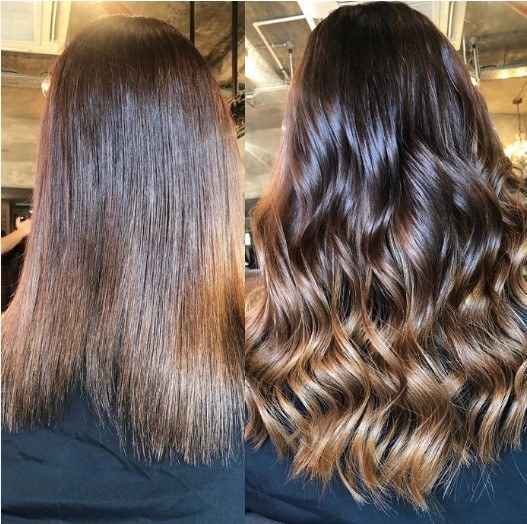
Ivana Farisei’s senior technicians run this zone-mapping process as standard for any client requesting an advanced colour technique alongside microbonds, treating it as a prerequisite step rather than an optional upgrade. Clients coming from a previous, more generic fitting elsewhere often comment on how much more detailed this process feels compared with what they’d previously assumed was already a thorough consultation.
Cost Considerations for Advanced Techniques
Advanced zone-specific bond mapping combined with integrated colour techniques naturally costs more than a standard, uniform fitting, reflecting the additional planning time, the closer coordination between colourist and extension technician, and often a higher grade of hair needed to achieve a convincing gradient within a shorter overall length. Across London, this combination typically adds £100 to £250 to a standard short-hair microbond fitting, bringing the total for a full head to roughly £550 to £1,000 depending on the specific colour technique requested and the starting hair condition.
This premium buys something concrete: a result that holds its convincing blend for the full wear cycle, rather than one that looks good on day one but reveals an obvious bond pattern or colour banding as the hair moves and settles over the following weeks. For experienced clients who have already paid for a standard fitting that didn’t quite deliver this level of polish, the additional cost of a genuinely advanced approach is frequently worth it the second time around.
Understanding the Removal Side of Advanced Techniques
Advanced colour and bond combinations on shorter hair also require more careful removal planning than a standard fitting, since ombre-blended pieces and zone-varied bond sizes both need a technician who understands exactly how each section was originally placed. A rushed or generic hair extension removal london providers sometimes offer as an afterthought can undo the careful zone-specific work of the original fitting, pulling bonds designed for gentle, mechanical release with unnecessary force simply because the technician doesn’t recognise the specific placement logic used.
Experienced clients should specifically ask whether the same salon that performed an advanced fitting will also handle the eventual removal, since continuity of knowledge about the original bond mapping meaningfully reduces the risk of an ill-suited, generic removal approach undoing months of careful, zone-specific work.
Ivana Farisei keeps a detailed bond map on file for every advanced fitting specifically for this reason, so that whichever technician handles the eventual removal — even if it isn’t the original stylist — has an accurate record of exactly where each ring sits and what colour technique was integrated into the placement plan.
Common Mistakes to Avoid at This Level
- Assuming any technician comfortable with microbonds can handle advanced colour integration. Zone-specific bond mapping combined with ombre transition planning requires specific, demonstrated experience, not just general competence with the basic method.
- Treating colour and bond placement as separate decisions. Planning them together, before any hair is ordered, produces a meaningfully more convincing result than adjusting colour after bond placement has already been finalised.
- Choosing keratin fusion purely for the longer interval between appointments. For clients planning multiple cycles over several years, the lower cumulative stress of microbonds is often the better long-term choice despite the more frequent visits.
- Booking removal at a different, unfamiliar provider. A technician unfamiliar with the original zone-specific bond mapping is more likely to apply a generic approach that risks unnecessary breakage.
- Underestimating how much shorter length compresses colour transitions. A gradient planned for long hair, applied without adjustment to a shorter length, often looks compressed and banded rather than smoothly graduated.
What to Look for When Choosing an Advanced Provider
Given how much technical planning separates a genuinely advanced fitting from a merely competent one, it’s worth having specific questions ready before booking. Ask whether the technician maps bond zones individually or applies a single template across the head. Ask how colourist and extension technician coordinate on integrated techniques like ombre or root-smudging — ideally the same person handles both, or they work as a closely briefed team rather than two separate appointments with no shared plan. Ask directly about ring material and whether it’s been upgraded from older aluminium standards to copper-lined or silicone-coated alternatives.
A provider confident in their advanced offering, such as Ivana Farisei, will answer each of these questions specifically and in detail, rather than falling back on general reassurance about quality without addressing the technical particulars a genuinely experienced client is right to ask about.
Frequently Asked Questions
Can ombre colour work well with short hair extensions?
Yes, provided bond placement and colour transition are planned together from the outset, accounting for the shorter overall span available for the gradient to complete within.
Is keratin fusion or microbonds better for shorter hair?
Microbonds generally offer lower cumulative stress over multiple wear cycles, while keratin fusion offers a longer interval between appointments; the right choice depends on whether you’re planning a single set or ongoing, multi-cycle wear.
Does regional location affect the quality of advanced techniques available?
Yes — London currently has the deepest concentration of technicians trained specifically in zone-specific bond mapping and integrated colour techniques, though this expertise is gradually spreading to other UK regions.
Should I return to the same salon for removal as for fitting?
Generally yes, particularly for advanced, zone-specific fittings, since the original technician’s knowledge of exact bond placement reduces the risk of an unfamiliar approach causing unnecessary damage during removal.
How much more does an advanced, zone-specific fitting typically cost?
Expect a premium of roughly £100 to £250 over a standard, uniform fitting, reflecting the additional planning and technician time zone-specific bond mapping and integrated colour work requires.
What ring material should an advanced provider be using?
Copper-lined or silicone-coated rings are now the standard among advanced providers, replacing older plain aluminium rings that were more prone to oxidising and causing scalp irritation with repeated washing.
Can I request root-smudging or balayage instead of a traditional ombre gradient?
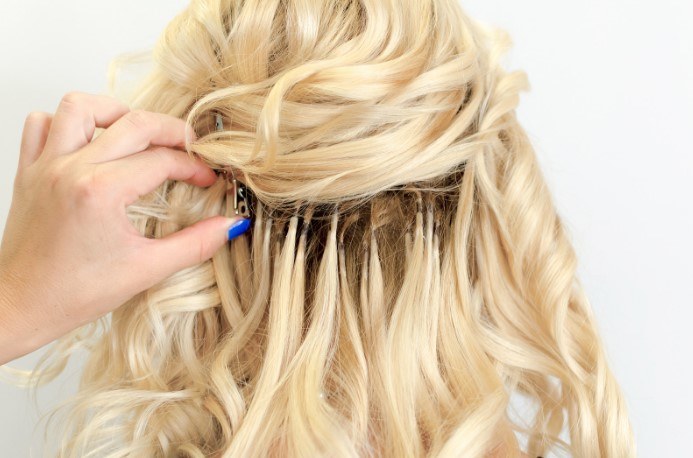
Yes, both are viable and often better suited to shorter lengths, since they don’t rely on the same amount of length a traditional ombre gradient needs to transition smoothly.
Genuine technical advancement in this category isn’t about a newer tool or a flashier marketing term — it’s about the planning discipline behind zone-specific bond placement and colour integration, applied consistently rather than as an occasional upsell. For experienced clients who already know what a standard fitting looks like, that planning discipline is the detail worth seeking out on every subsequent visit.