Contents:
- Understanding Curl Direction Fundamentals
- Away From Face vs. Toward Face
- Best Curling Direction for Different Face Shapes
- Round Face Shapes
- Square Face Shapes
- Oval Face Shapes
- Heart-Shaped Face (Wider Forehead, Narrow Chin)
- Rectangular Face Shapes
- Which Way to Curl Hair by Hair Length
- Short Hair (Under 10cm)
- Medium Hair (10-25cm)
- Long Hair (Over 25cm)
- Professional Technique Breakdown: Step by Step
- Creating Curls Away From Face
- Creating Curls Toward Face
- Alternating Direction (Professional Look)
- Expert Perspective: What Stylists Recommend
- Product and Equipment Costs
- Common Mistakes When Curling
- FAQ Section
- Which way should I curl my hair to look thinner?
- Does curl direction affect how long curls last?
- Can I curl my hair away from my face if I have a large forehead?
- What’s the best curling direction for thick hair?
- Should I curl all my hair in one direction?
You’re holding a curling iron, wondering which way to curl hair to get the flattest, most flattering result. The answer depends on your face shape, hair length, and whether you want curls that frame your face or ones that project volume away from it. Understanding curl direction transforms your styling results from mediocre to polished.
Understanding Curl Direction Fundamentals
Hair curls away from the barrel of a curling iron, meaning the curl’s opening (where the end of the hair sits) faces the opposite direction from the barrel placement. This matters because curl direction affects how curls interact with your face and hair volume. Curls wrapping away from your face create a lifted, open effect. Curls wrapping toward your face create a framing, inward effect. Neither is wrong—the choice depends on your desired outcome.
Away From Face vs. Toward Face
Curls away from face: Wrap the barrel horizontally (parallel to your chin), placing it on the outer edge of your hair section. Roll backward, away from your face. The curl opens away from your face, creating volume projection outward. This style lifts the face, appears younger, and works on all face shapes. It’s the most commonly recommended technique in salons.
Curls toward face: Wrap the barrel on the inner edge of your hair section, rolling inward toward your face. Curls wrap around your face, creating a framing effect. This style suits oval or rectangular faces, softening angles. It requires more precision to avoid looking accidentally messy.
Best Curling Direction for Different Face Shapes
Round Face Shapes
Round faces benefit from curls that create vertical movement and height at the crown. Curl away from the face throughout, particularly at the sides and front sections. Avoid horizontal curls that sit flat, as they emphasise roundness. Volume at the crown and sides pulled back creates elongation. Recommended: curling iron size 32-38mm (approximately 1.25-1.5 inches), curled away from face.
Square Face Shapes
Square faces have strong jawlines. Soften them by curling away from the face at the crown and temples to create lift, then curl some sections inward near the jawline to draw attention inward rather than emphasising the jawline. This mixed approach balances angular features. An approximate 50-50 split (away from face at crown, toward face near chin) works beautifully.
Oval Face Shapes
Oval faces are the most versatile—both directions work equally. Curl away from the face for a polished, youthful look. Alternatively, curl toward the face for a romantic, softer appearance. Choice depends on the occasion and your personal preference rather than face shape constraints.
Heart-Shaped Face (Wider Forehead, Narrow Chin)
Create volume at the chin and jawline by curling inward at the lower sections. At the crown and forehead area, curl away to create softness without emphasising width. This balances proportions by visually narrowing the forehead and widening the lower face.
Rectangular Face Shapes
Similar to square faces, rectangular faces benefit from mixed curling directions. Curl away at the crown for height, then alternate inward and outward curls along the sides to break up vertical lines and add width. This prevents a stretched appearance.
Which Way to Curl Hair by Hair Length
Short Hair (Under 10cm)
With short hair, curling direction is less about face flattery and more about achieving hold and shape. Curl away from the face throughout—this direction holds better on shorter lengths because the curl has more barrel contact. Short hair relaxes quickly (within 4-6 hours), so tight technique matters. Curling iron size: 25-32mm (1 inch or less).
Medium Hair (10-25cm)
Medium length offers flexibility. Use the face-shape guidelines above. Alternating directions (away at crown, toward at sides) creates dimension and depth. A common professional technique: curl the top and crown sections away from face, then alternate remaining sections (one outward, one inward) down the sides. This creates movement without predictability.
Long Hair (Over 25cm)
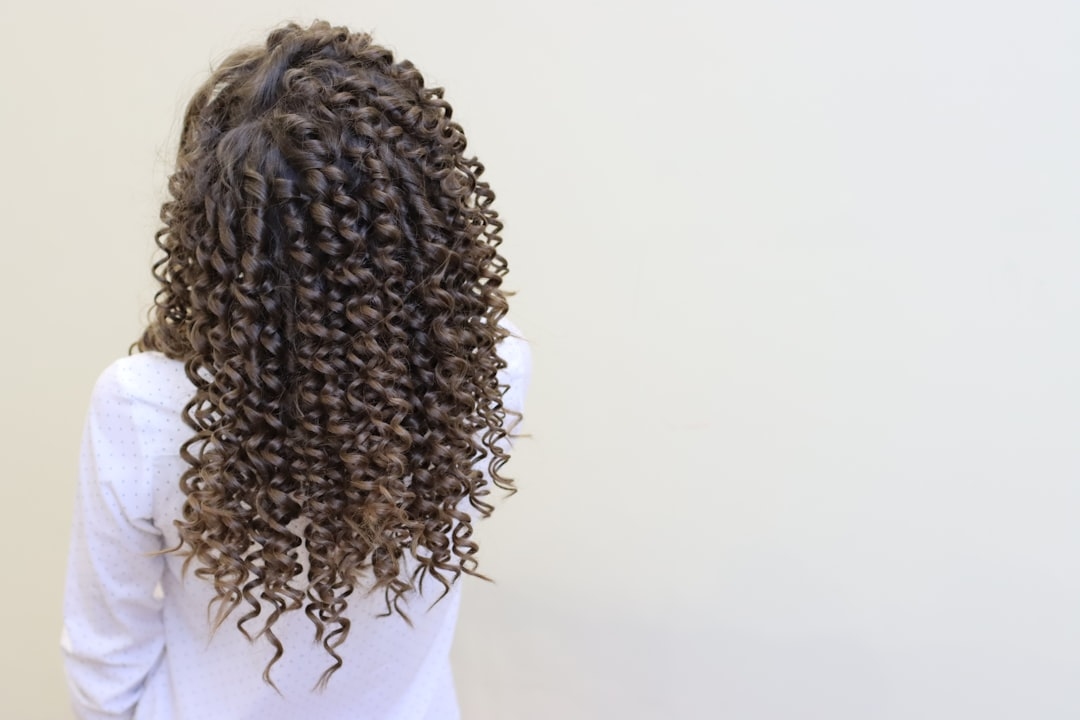
Long hair allows dramatic directional choices. Curl away from face for a classic, lifted look that suits formal occasions. Curl toward face for beachy, romantic waves. Many stylists use a “barrel-in” method: curling all sections in one direction (typically away from face) throughout, creating uniform waves. For long hair, result durability improves because length provides anchor weight.
Professional Technique Breakdown: Step by Step
Creating Curls Away From Face
- Section hair into 2-inch (5cm) sections
- Place the curling iron barrel horizontally on the outer edge of the section (away from face)
- Wrap the section around the barrel, rolling away from your face
- Hold for 15-25 seconds depending on barrel size and hair thickness
- Release and allow the curl to cool (cooling sets the curl shape)
Creating Curls Toward Face
- Section hair into 2-inch (5cm) sections
- Place the barrel on the inner edge of the section (closer to your face)
- Wrap the section around the barrel, rolling toward your face
- Hold for 15-25 seconds
- Release and cool
Alternating Direction (Professional Look)
- Crown sections: away from face
- Left temple section: toward face
- Right temple section: toward face
- Left side sections: away from face
- Right side sections: away from face
- This creates a balanced, three-dimensional appearance
Expert Perspective: What Stylists Recommend
Lara Mitchell, a senior stylist at Taylor Galleries in Edinburgh, explains: “Which way to curl hair comes down to the look you want, not rules. Most clients ask which way because they’ve seen tutorials with conflicting advice. I always recommend: start with away from face for every client. It’s harder to mess up, it suits all face shapes, and it creates the lift every client wants. Once they master that, they can experiment with inward curls for specific sections if they prefer dimension. The key is consistency—mixing directions randomly looks accidental, not intentional.”
Product and Equipment Costs
A quality curling iron costs £40-£150. Budget options (Tesco, Sainsbury’s) cost £15-£30 and work adequately. Heat protectant spray (essential before curling): £5-£10. Hairspray to set curls: £4-£8. Total initial investment: approximately £50-£70 for a complete setup. These tools last 3-5 years, amortising to roughly £1-£2 per use.
For sustainable styling, invest in ionic technology curling irons (approximately £50-£100), which reduce heat damage and frizz, extending hair health. Eco-friendly hairspray (packaging from recycled materials) costs similarly to standard spray (£4-£8) and reduces plastic waste.
Common Mistakes When Curling
- Inconsistent direction: Mixing directions randomly without intention looks messy. Choose a consistent pattern or intentional variation.
- Wrapping too loosely: The barrel contact is critical. Wrap tightly enough that the iron has resistance; too loose, and curls won’t form properly.
- Holding too briefly: Less than 10 seconds results in waves rather than curls. Hold 15-25 seconds for defined curls.
- Releasing while too hot: Allow curls to cool completely before touching. Hot curls relax and fall flat immediately.
- Starting with dry hair: Curls hold better on hair with slight dampness. Completely dry hair curls loosely.
FAQ Section
Which way should I curl my hair to look thinner?
Curl away from your face to create lift and separation. This directional choice makes hair appear fuller and lighter at the roots, which paradoxically makes overall appearance appear slimmer by lifting the face. Volume at the crown creates height that’s flattering on most body types.
Does curl direction affect how long curls last?
Slightly. Curls away from face tend to hold marginally longer (by 1-2 hours) because the spiral direction aligns with how hair naturally settles. The difference is minimal; technique, hair type, and product matter far more than direction.
Can I curl my hair away from my face if I have a large forehead?
Yes. Curling away from face actually flatters larger foreheads by drawing focus upward and creating height at the crown, which visually balances forehead size. You can add soft wispy curls around the face to soften further.
What’s the best curling direction for thick hair?
Thick hair holds curls well in both directions. Use a larger curling iron (38mm or bigger) and curl away from face for a polished, voluminous look. Thick hair requires 20-30 seconds per section to properly absorb heat.
Should I curl all my hair in one direction?
Yes, for beginners. Curling all sections away from face creates a cohesive, polished result. Once you’re comfortable, experiment with alternating directions for dimension. Consistency matters more than direction choice.