Contents:
- How Stress and Anxiety Trigger Hair Loss
- Can Anxiety Cause Hair Loss in Specific Patterns?
- The Timeline: When Does Stress-Related Hair Loss Appear?
- A Reader’s Experience: Stress-Related Loss Recovery
- Beyond Hormones: Anxiety’s Indirect Effects on Hair
- Trichotillomania: Anxiety-Driven Hair Pulling
- Managing Stress-Related Hair Loss
- Sustainable Perspective on Stress and Hair
- FAQ: Anxiety, Stress, and Hair Loss Questions
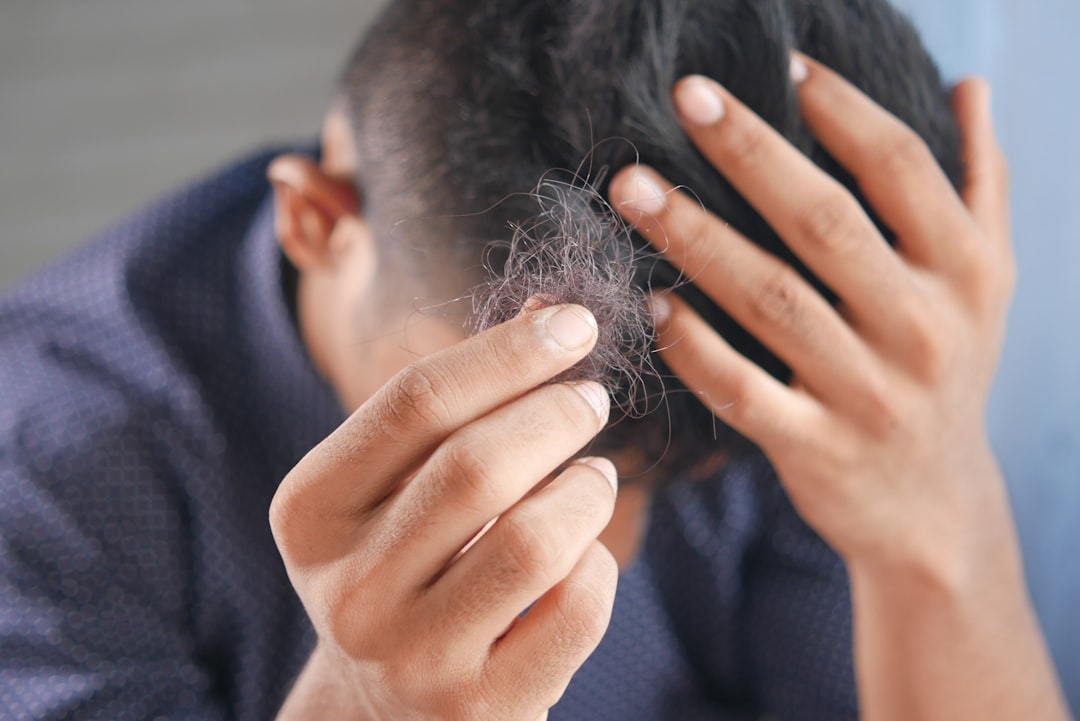
Three months after a major life stressor—redundancy, divorce, or bereavement—approximately 70% of people experience noticeable hair shedding. This timing isn’t coincidence. Can anxiety cause hair loss? Yes, definitively. The mechanism involves stress hormones that push hair prematurely into the resting phase, resulting in significant shedding weeks later when those hairs complete their growth cycle.
How Stress and Anxiety Trigger Hair Loss
Your hair grows in cycles. Normally, 85 to 90% of scalp hairs sit in the anagen phase (active growth), whilst 1 to 2% rest in the telogen phase (shedding phase). Acute or chronic stress elevates cortisol, your body’s primary stress hormone. Elevated cortisol signals hair follicles to prematurely shift into telogen phase. When abnormally large numbers of hairs synchronously enter the resting phase—sometimes 30 to 50% of scalp hair—massive shedding becomes noticeable within 2 to 3 months as these hairs complete their cycle and shed.
This condition, telogen effluvium, accounts for the majority of stress-related hair loss. It’s not permanent damage—hairs aren’t destroyed, merely temporarily halted in growth. Recovery is expected as stress decreases and cortisol normalises. Most people see shedding decrease after 3 to 4 months of reduced stress, with full recovery within 6 months.
Chronic anxiety affects hair differently than acute stress. Sustained elevation of cortisol and other stress hormones creates ongoing disruption to hair growth cycles. Some people develop chronic telogen effluvium, where low-level continuous shedding persists for months or years, extending beyond typical recovery timelines. Additionally, anxiety sometimes triggers trichotillomania—compulsive hair pulling—creating hair loss through direct mechanical damage rather than hormonal disruption.
Can Anxiety Cause Hair Loss in Specific Patterns?
Telogen effluvium typically causes diffuse shedding across the entire scalp rather than localised loss in one area. You’ll notice increased hair in your shower, on your pillow, and in your brush, but not necessarily a visible bald patch. This distinguishes it from androgenetic alopecia (pattern hair loss), which appears as receding hairline or crown thinning.
Alopecia areata—an autoimmune condition where the body attacks hair follicles—is also stress-triggered in susceptible individuals. Unlike telogen effluvium’s diffuse shedding, alopecia areata creates distinct circular bald patches. The stress-trigger isn’t the direct cause; rather, stress appears to activate autoimmune response in genetically predisposed people.
The Timeline: When Does Stress-Related Hair Loss Appear?
This delayed onset confuses most people. The stressful event occurs—then months pass with no obvious hair changes. Shedding suddenly appears, seemingly unrelated to the past events. Understanding the timeline prevents this confusion. Hair pushed into telogen phase by stress won’t shed until 8 to 12 weeks later, when that phase naturally completes. You’re observing the aftermath of stress from months prior, not immediate stress response.
Acute stress—a single major event—typically triggers telogen effluvium with peak shedding 8 to 12 weeks later. Chronic anxiety produces more persistent low-level shedding without as dramatic a peak. The body’s stress response fades within 3 to 6 months if stress ends; shedding follows this recovery curve.
A Reader’s Experience: Stress-Related Loss Recovery
Emma, a London-based project manager, experienced massive redundancy in January 2026. By April, she noticed her shower drain clogged with hair daily. “I panicked thinking I had alopecia,” she recalled. “My GP explained it was stress-related and would resolve.” She implemented stress-reduction techniques—meditation, exercise, and therapy. By September 2026, shedding had normalised. “The uncertainty was harder than the shedding itself. Understanding the timeline and knowing it would resolve helped me manage the anxiety around hair loss rather than letting that anxiety create more loss.”
Beyond Hormones: Anxiety’s Indirect Effects on Hair
Chronic anxiety disrupts sleep, often worsening hair loss beyond cortisol’s direct effects. Hair repair and growth occur during sleep; poor sleep disrupts these processes. Anxiety also triggers inflammatory responses and reduces immune function, potentially worsening hair loss severity. Additionally, anxious people sometimes neglect self-care—nutrition suffers, exercise drops, grooming routines fail—indirectly worsening hair health through multiple mechanisms simultaneously.
Trichotillomania: Anxiety-Driven Hair Pulling
Trichotillomania—hair-pulling disorder—is distinct from telogen effluvium. People with trichotillomania compulsively pull out hair, often unconsciously whilst anxious or stressed. This creates real mechanical damage and visible hair loss or balding. Unlike telogen effluvium where hairs naturally regrow after stress decreases, trichotillomania creates actual damage to follicles that may not fully recover. Treatment involves cognitive behavioural therapy, habit-reversal training, and managing underlying anxiety. Dermatological treatment alone—creams or supplements—won’t address the psychological root cause.

Managing Stress-Related Hair Loss
Identify and address the stressor. If anxiety stems from a specific source—work pressures, relationship issues, financial concerns—addressing the root cause reduces stress more effectively than symptom management alone. Therapy, counselling, or practical problem-solving reduces stress faster than waiting for time to pass.
Implement stress-reduction practices. Meditation, yoga, and breathing exercises lower cortisol within minutes. Regular practice—20 to 30 minutes daily—produces measurable anxiety reduction within 2 to 4 weeks. Exercise increases endorphins and reduces cortisol; 30 minutes of aerobic activity 4 to 5 times weekly significantly improves anxiety symptoms.
Prioritise sleep. Sleep deprivation worsens anxiety and hair loss simultaneously. Aiming for 7 to 9 hours nightly, maintaining consistent sleep schedules, and reducing screen time before bed improve sleep quality substantially. Better sleep reduces cortisol and supports hair regrowth.
Optimise nutrition. Adequate protein (1.6 grams per kilogram body weight daily), iron, zinc, and B vitamins support hair growth. Deficiency in these nutrients worsens stress-related shedding. Eating whole foods, reducing processed foods, and potentially supplementing deficient nutrients supports recovery.
Consider therapy. Cognitive behavioural therapy specifically addresses anxiety. Many people combining medical treatment with psychological support experience faster recovery than either alone.
Sustainable Perspective on Stress and Hair
Rather than viewing stress-related hair loss as a permanent crisis, recognising it as a reversible condition empowers action. Most stress-related shedding resolves within 6 months of stress reduction. Focusing energy on addressing the underlying anxiety—through therapy, lifestyle changes, or medical treatment—produces better outcomes than obsessing over hair loss itself, which often creates additional anxiety perpetuating the cycle.
FAQ: Anxiety, Stress, and Hair Loss Questions
Is stress-related hair loss permanent? No. Telogen effluvium is temporary; hair regrows within 6 months typically. Trichotillomania causes more lasting damage but responds to behavioural treatment. Addressing stress allows recovery.
How much hair loss is normal from stress? Normal daily shedding is 50 to 100 hairs. Stress-related shedding increases this to 200 to 400 daily at peak. If you notice significantly more hair in your brush or shower, stress is likely a factor.
Can anxiety medication treat stress-related hair loss? Medication reduces anxiety, which reduces cortisol, which slows shedding. However, medication doesn’t reverse the telogen effluvium process directly. Patience plus stress reduction produces recovery faster than medication alone.
Does hair grow back after stress-related loss? Yes. Once stress decreases, cortisol normalises, and hair returns to normal growth cycles. New hair growth becomes visible within 3 to 6 months, with full recovery by 12 months typically.
Can I prevent stress-related hair loss? Proactive stress management—regular exercise, meditation, therapy—reduces cortisol chronically, minimising shedding even during stressful periods. Prevention is more effective than treatment.