Contents:
- The Science Behind Hair Growth and Damage
- How Often Should You Cut Your Hair Based on Your Hair Type
- Fine or Thin Hair
- Medium-Thickness Hair
- Thick or Coarse Hair
- Curly or Textured Hair
- Cutting Frequency by Hair Length and Style
- Short Hair (Under 5 Inches)
- Medium Length (5-12 Inches)
- Long Hair (Longer Than 12 Inches)
- Lifestyle and Styling Habits That Affect Cutting Frequency
- Heat Styling
- Chemical Treatments (Colour, Perms, Relaxers)
- Swimming and Sun Exposure
- Pollution and Water Quality
- How to Know When Your Hair Actually Needs a Cut
- Comparing Hair Trims vs. Full Haircuts
- Professional Advice vs. At-Home Maintenance
- Budget-Friendly Approach to Regular Cutting
- Frequently Asked Questions
- Can I go longer between cuts if I don’t style my hair much?
- Do haircuts make your hair grow back faster?
- Should I cut my hair more often if it’s curly?
- What’s the difference between a trim and a “dusting”?
- Do I need to cut my hair more often in summer?
- Final Words on Hair Maintenance
You’re sitting in the chair at your favourite salon, and your stylist asks that question again: “When was your last trim?” You pause, unsure if it’s been six weeks or six months. Your hair looks decent enough—no split ends visible—but something feels off. The styling doesn’t flow like it used to, and you’re spending twice as long trying to make it sit right.
That moment of uncertainty is more common than you’d think. Hair cutting frequency isn’t one-size-fits-all, yet most people either visit the salon too often or wait far too long between cuts. Getting this simple decision right transforms how your hair looks and feels, plus it saves money in the long run.
Quick Answer
Most people with medium-length hair benefit from a trim every 6-8 weeks. Fine or damaged hair needs cutting every 4-6 weeks. Thick or healthy hair can go 8-10 weeks. Curly hair often thrives with cuts every 8-12 weeks. The key: don’t wait until split ends have visibly damaged 2 inches of your hair.
The Science Behind Hair Growth and Damage
Human hair grows approximately 6 inches per year on average, which works out to about half an inch per month. This growth rate applies fairly consistently across different hair types, though stress, nutrition, and hormones can affect it slightly. The real issue isn’t growth—it’s damage.
Every time your hair is washed, dried, brushed, or exposed to the sun, the outer protective layer (called the cuticle) sustains microscopic damage. This damage accumulates, travelling up the hair shaft from the ends. Without regular trimming, those damaged ends split further, and the splitting can migrate upwards by up to an inch per month if left unchecked.
Here’s a concrete example: if you wash your hair every three days and style it with heat, your ends experience roughly 100+ manipulation events per month. After eight weeks without a trim, that’s 800 instances of stress concentrated on the same 2 inches of hair. Those ends become brittle, frizzy, and prone to breakage. A simple trim removes the most damaged 0.5 to 1 inch, instantly restoring shine and reducing tangles.
How Often Should You Cut Your Hair Based on Your Hair Type
Fine or Thin Hair
Fine hair tends to show damage faster because each individual strand is thinner and more vulnerable to breakage. Additionally, fine hair often lacks the density to hide split ends, making even minor damage appear more pronounced. Most stylists recommend cutting fine hair every 4-6 weeks.
The strategy here is preventative maintenance. By cutting more frequently, you remove damage before it travels far up the hair shaft, maintaining the appearance of volume and smoothness. If you have fine hair and you’re currently cutting every 8-10 weeks, you’ll likely notice an immediate difference in manageability once you switch to a 6-week schedule. Your blow-dry will take less time, and your hair will hold a style better.
Medium-Thickness Hair
This is the most common hair type and the easiest to maintain. Medium hair strikes a balance between hiding minor damage and still showing the effects of poor care. The 6-8 week cutting schedule is the industry standard for this hair type—and it’s backed by years of salon data. At six weeks, your ends still look fresh and your style holds its shape. By eight weeks, you start to notice minor fraying, particularly if you use heat styling regularly.
A practical tip: if you colour your hair, aim for the 6-week mark rather than 8 weeks. Coloured hair is chemically treated, and the combination of colour damage plus styling damage compounds faster than with virgin (uncoloured) hair.
Thick or Coarse Hair
Thick hair is naturally more resilient. The thicker each strand, the longer it takes for damage to become visible. Many people with thick hair can go 8-10 weeks between cuts without noticeable deterioration. The cuticle layer is more robust, and minor frizz is less obvious.
However, thick hair often comes with higher density (more individual strands per square inch), which can make a style look bulky if left too long. Even if the ends aren’t damaged, a cut every 8-10 weeks helps maintain shape and prevents a heavy, unkempt appearance. If your thick hair is also curly, follow the curly hair guidelines instead.
Curly or Textured Hair
Curly and textured hair requires special consideration. The curl pattern creates natural tension points where the hair is more likely to break, and curls hide the full length of each strand, making damage harder to spot until it’s advanced. Most curl specialists recommend cutting every 8-12 weeks, or even longer.
The reason: curly hair is typically drier due to the curl pattern preventing natural oils from travelling down the shaft evenly. Frequent cutting on already-dry hair can make texture problems worse. Instead, focus on deep conditioning between cuts and use a microfiber towel or t-shirt to dry (not a regular towel). When you do cut, ask your stylist for a “DevaCut” or similar curl-specific technique rather than a standard cut—this preserves the curl pattern and removes only the truly damaged ends.
Cutting Frequency by Hair Length and Style
Short Hair (Under 5 Inches)
Short styles grow out quickly and lose shape fast. A pixie cut or very short bob needs trimming every 3-4 weeks to maintain definition. The investment here is regular maintenance, but the upside is that short hair is often simpler to style and requires less daily manipulation.
Medium Length (5-12 Inches)
This is the sweet spot for most people. Medium-length hair shows damage noticeably but not immediately, and a cut every 6-8 weeks keeps it looking intentional and polished. Medium-length styles are versatile—you can wear them down, in a ponytail, or half-up—without frequent trims affecting your styling options dramatically.
Long Hair (Longer Than 12 Inches)
Long hair can sometimes go longer between cuts because length provides a buffer. However, many people with long hair make the mistake of waiting too long, thinking that less frequent cuts preserve length faster. The opposite is true. If you don’t trim every 8-10 weeks, split ends travel upwards, and you actually lose more length overall due to breakage.
A common scenario: Sarah avoided cuts for four months because she wanted to grow her hair. Her ends became so damaged that her stylist had to remove 3 inches to eliminate all visible splitting. Had she cut 0.5 inches every 8 weeks over the same four-month period, she’d have trimmed only 1 inch total and had healthier, stronger hair still growing out.
Lifestyle and Styling Habits That Affect Cutting Frequency
Heat Styling
If you use a blow dryer, straightener, or curling iron regularly, your hair sustains more cumulative damage. Heat styling causes water to rapidly evaporate from inside the hair shaft, weakening the protein structure. People who heat-style daily should cut every 5-7 weeks instead of 6-8 weeks. Those who air-dry or heat-style only 1-2 times per week can stretch to 8-10 weeks.
Chemical Treatments (Colour, Perms, Relaxers)
Chemical treatments open the hair cuticle and alter the internal structure. Coloured or permed hair is weaker and more prone to breakage than virgin hair. If you colour your hair every 4-6 weeks, schedule your trims every 6 weeks as well, ideally one week before or one week after a colour appointment—not the same day.

Swimming and Sun Exposure
Chlorine and saltwater both strip moisture and cause cuticle damage. If you swim regularly (more than once per week), move to a 5-6 week cutting schedule. Similarly, prolonged sun exposure without UV protection damages hair. Holiday season or summer months might warrant slightly more frequent trims.
Pollution and Water Quality
Hard water (water with high mineral content) deposits minerals on the hair shaft, making it dull and brittle. If you live in an area with hard water or high pollution, regular trims become even more important because damage compounds faster. A 6-week schedule is safer than stretching to 8 weeks.
How to Know When Your Hair Actually Needs a Cut
Guidelines are helpful, but your hair will tell you when it needs attention. Here are five specific signs that a trim is overdue:
- Visible split ends: Look at a few random strands under bright light. If the ends are frayed or split into multiple pieces, a trim is needed within a week or two.
- Difficulty styling: Your usual blow-dry routine takes significantly longer, or your hair won’t hold a style without extra product or effort.
- Tangles and knots: You’re brushing through tangles more than usual, even immediately after washing.
- Dullness despite clean hair: Your hair looks dull or straw-like even when freshly washed and conditioned. This suggests cuticle damage that a trim will address.
- Frizz that doesn’t respond to products: If serums and smoothing creams aren’t taming your frizz, it’s likely because the damage is structural rather than surface-level. A trim removes the worst damage.
Comparing Hair Trims vs. Full Haircuts
This is a point of confusion for many people. A “trim” and a “haircut” aren’t the same thing, and understanding the difference helps you book the right appointment.
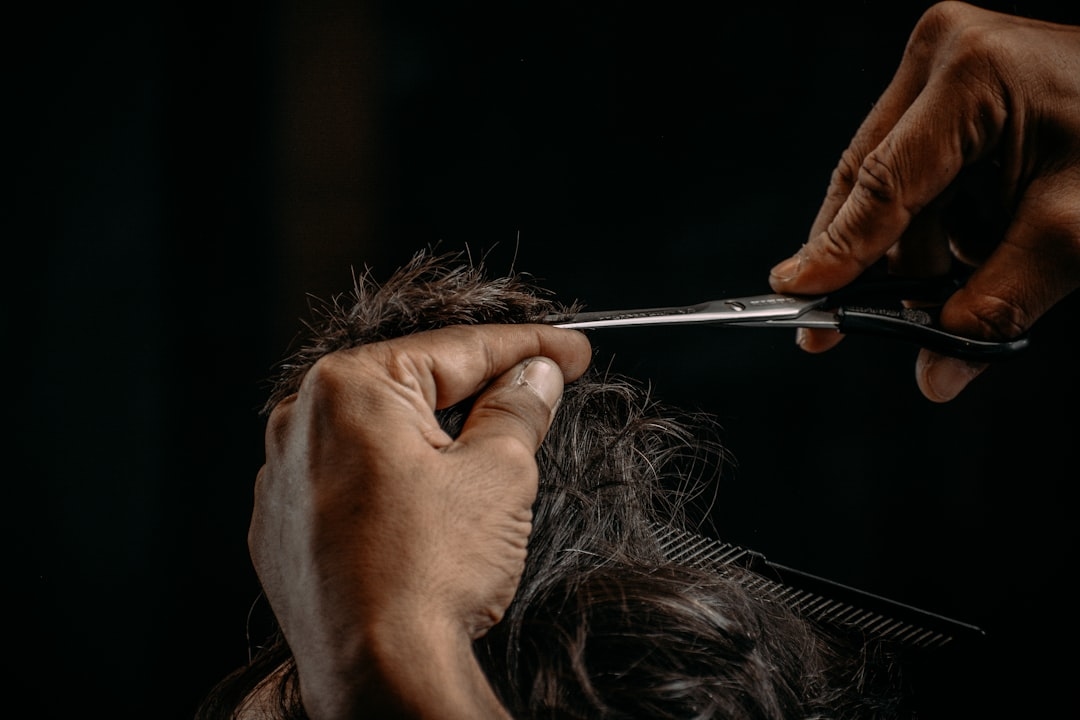
A trim is a maintenance cut that removes only the damaged ends—typically 0.5 to 1.5 inches. Your overall style, length, and shape stay the same. Trims cost less (usually £15-30 at a standard UK salon) and take 15-30 minutes. You’d get a trim every 6-8 weeks to maintain a style you already have.
A haircut is a complete style change or shape adjustment. Your stylist removes 2 or more inches, possibly changes layers, updates the overall shape, or alters the length significantly. Cuts cost more (£35-100+ depending on salon location and stylist experience) and take 45 minutes to over an hour. You might get a new cut every 3-4 months if you like to refresh your style, or only a few times per year.
Many people book a haircut when they really only need a trim, or they confuse the two and then become frustrated by the cost. If you love your current style and just want to keep it healthy, book a trim. If you’re bored and want something different, book a cut.
Professional Advice vs. At-Home Maintenance
Ideally, you should get a professional cut on the schedule that suits your hair type. At-home trims are possible but risky—one wrong snip can create a notch or uneven line that’s hard to fix. Most hair professionals recommend against cutting your own hair, especially if you have long hair or layers.
That said, at-home maintenance between professional cuts does help. Invest in sharp scissors (not regular craft scissors—proper hair scissors cost £15-40 but last years). You can carefully trim 0.25 inches off the very ends if you’re confident, focusing on cleaning up stray hairs or smoothing uneven layers. Many people find this minimal touch-up helpful between their 6-8 week salon appointments.
Budget-Friendly Approach to Regular Cutting
The cost of regular cuts adds up. If you’re paying £25 per trim every 6 weeks, that’s roughly £200 per year just for maintenance. Here are realistic ways to manage that expense:
- Visit apprentice stylists: Many salons have junior stylists charging 30-50% less than senior stylists. The cut quality is usually very similar; the difference is experience and speed.
- Book appointments strategically: Some salons offer discounts for off-peak times (mid-week, late afternoon). Ask about their pricing structure.
- Get a less-frequent, more dramatic cut: Instead of trimming 0.5 inches every 6 weeks, some people prefer a more noticeable cut every 10-12 weeks. This reduces salon visits by a third but requires your hair to look slightly less polished in between.
- Learn basic at-home trims: For brave souls, trimming 0.25-0.5 inches yourself every other salon appointment can extend your cut’s life.
- Combine with other services: Book your cut at the same appointment as colouring or treatments to reduce overall trip frequency (but keep your trim timing in mind).
Frequently Asked Questions
Can I go longer between cuts if I don’t style my hair much?
Partially. If you air-dry your hair and rarely use heat or chemicals, you can stretch to 8-10 weeks or even 12 weeks depending on your hair type. However, even air-dried hair experiences damage from washing, environmental factors, and daily wear. Very long-haired people sometimes go 12-16 weeks between cuts, but this only works if the hair is in excellent condition. Inspect the ends regularly and cut as soon as you see fraying.
Do haircuts make your hair grow back faster?
No. Your hair’s growth rate is determined by genetics and overall health, not by cutting. Cutting removes damaged hair, making the remaining hair appear healthier and fuller, but it doesn’t accelerate growth rate. If you’re trying to grow your hair long, regular cuts still matter—they prevent the damage that causes breakage and loss of length.
Should I cut my hair more often if it’s curly?
Not necessarily. Curly hair often benefits from less-frequent cuts (every 8-12 weeks) because curls are fragile and frequent cutting can disrupt the pattern. The exception: if your curls are severely damaged or you’re using heat styling on curls regularly. In that case, move to 8-10 week intervals. Always use a curl-specific cut technique.
What’s the difference between a trim and a “dusting”?
A dusting is a very light trim removing just 0.25 inches or less—only the very tips. Stylists sometimes offer dusting as a budget option between full trims. It helps with split ends but isn’t as effective as a proper 0.5-1 inch trim at preventing accumulated damage. Dustings are occasionally useful for very long hair or between professional cuts, but they shouldn’t replace regular trims.
Do I need to cut my hair more often in summer?
If you swim, spend extended time in the sun, or use more heat styling in summer, yes—move to slightly more frequent cuts (every 5-7 weeks instead of 6-8 weeks) during that season. If you’re staying indoors with air-con and not swimming, there’s no seasonal need to change your routine.
Final Words on Hair Maintenance
Getting your hair cut at the right frequency sounds simple, but it genuinely transforms your hair’s health and appearance. The most common mistake isn’t cutting too often—it’s cutting too infrequently and letting damage accumulate. A regular trim every 6-8 weeks (adjusted for your specific hair type and lifestyle) costs far less than fixing severely damaged hair later, and it keeps your style looking intentional and polished.
Start by assessing your hair type, checking the state of your ends, and committing to a regular appointment schedule. You’ll notice the difference within a month—shinier, stronger, easier-to-style hair. That’s not luck. That’s the simple power of consistent, strategic maintenance.